
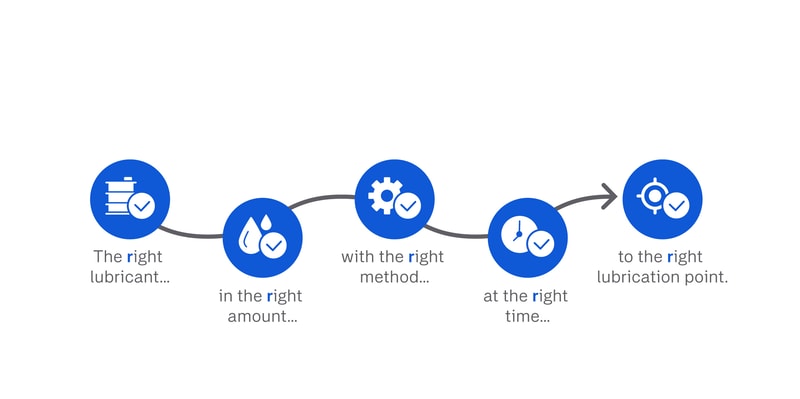
Timely supply of the right lubricant in the right quantity to the right lubrication point
The use of centralized automatic lubrication systems is an effective way to increase equipment availability while reducing personnel requirements. Lubrication systems minimize friction and wear, extending the lifespan of bearings and equipment.
Automatic systems designed for lubricating both individual machines and equipment across an entire enterprise ensure the supply of lubricant in the required quantity to all required points, which provides a number of technological advantages:
Advantages
Application areas
-
Machine tools
-
Process automation
-
Trucks/off-road equipment
-
Construction equipment, agricultural equipment and equipment for the forestry industry
-
Mining and cement industries
-
Food industry
-
Rail transport
-
Metallurgy
-
Pulp and paper industry
-
Wind energy
-
And much more

Single-line lubrication systems
For oil, liquid, and solid grease up to and including NLGI grade 3. Suitable for machine tool, textile, and printing industries (oil and liquid grease), as well as for heavy-duty applications in mining, food processing, and construction (plastic grease).

Dual-line lubrication systems
Suitable for oil, liquid, and solid grease up to NLGI grade 2. Suitable for heavy-duty applications, such as those found in the pulp and paper, mining, and metals industries. Suitable for up to 2,000 lubrication points over long distances (up to 120 m).

Multi-line lubrication systems
For oil or grease. Simple and reliable design ensures high dosing accuracy. Complies with ATEX and API standards for the oil and gas industry. From 1 to 30 outlets.
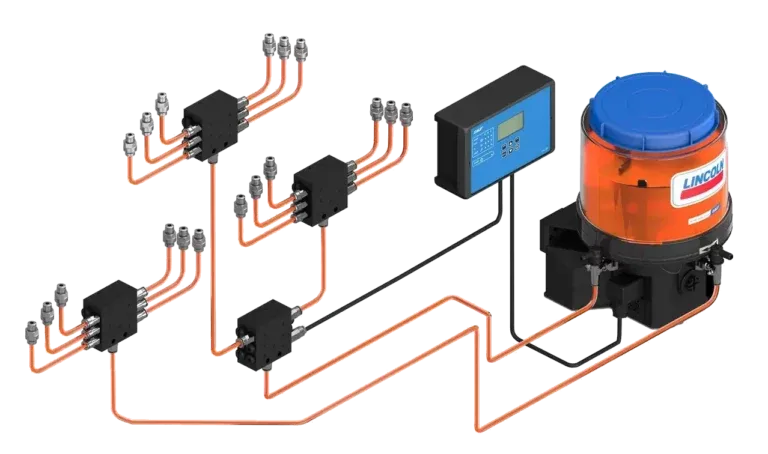
Sequential lubrication systems
title=»For oil, semi-fluid, and thick plastic grease up to and including NLGI grade 2. For use in small- and medium-sized equipment with dispersed lubrication points requiring varying amounts of lubricant. Frequent, measured delivery of lubricant to each lubrication point.«
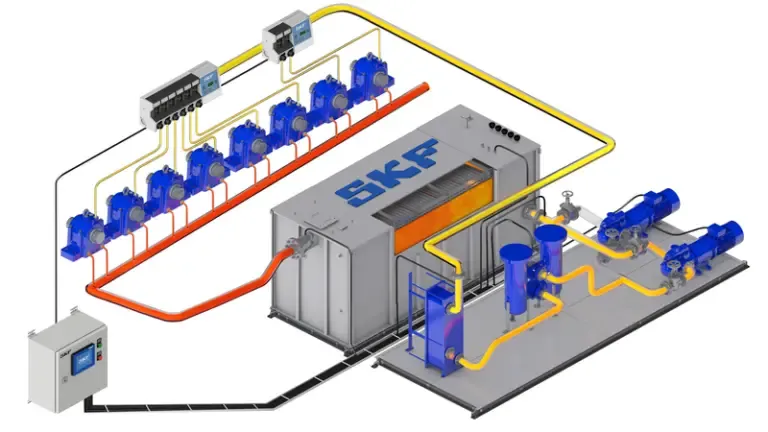
Circulating oil lubrication systems
They are primarily designed to ensure that circulating oil provides lubrication and cooling for heavily loaded bearings in equipment of various sizes. Additionally, the return line filters the oil, removing wear particles from friction points, and prevents corrosion by removing water and air from the bearings.

Oil-air lubrication systems
For bearings of high-speed spindles, chains and other special equipment in the metallurgical industry.

Minimum quantity lubrication systems
For high-speed cutting processes. Improves cost efficiency and environmental friendliness. The principle is simple: a precise amount of lubricant is sprayed onto the tool's cutting edge. With the MQL system, lubricant consumption is measured in milliliters per hour, not liters per minute.

Chain lubrication systems
Effective lubrication is essential for extending chain life and maintaining conveyor performance. Pneumatic and airless lubrication systems. Oil supply devices. Grease injection systems. Agricultural machinery.