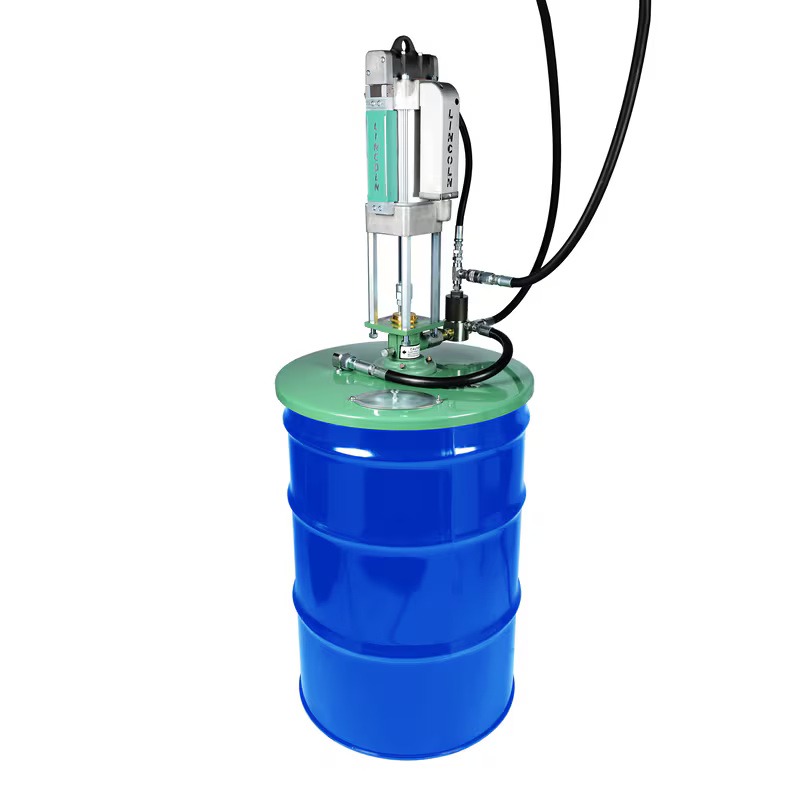
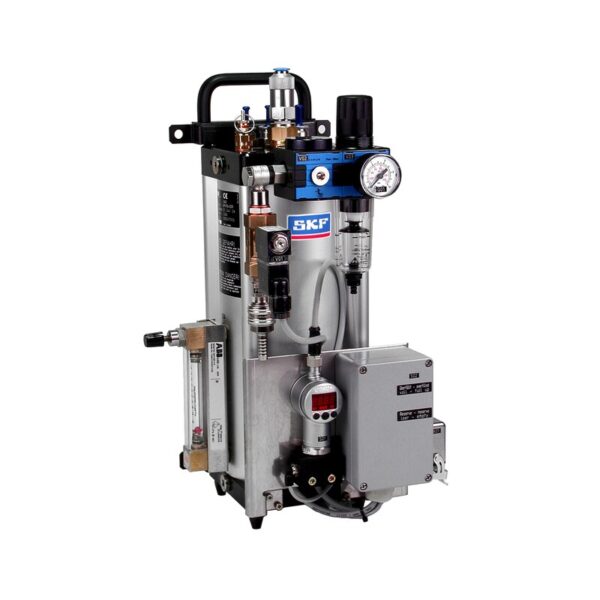
The 1826 pump's modular design consists of an air motor, attached pump tube, discharge valve assembly, drum cover, controller, lubricant connection hoses, and a discharge device.
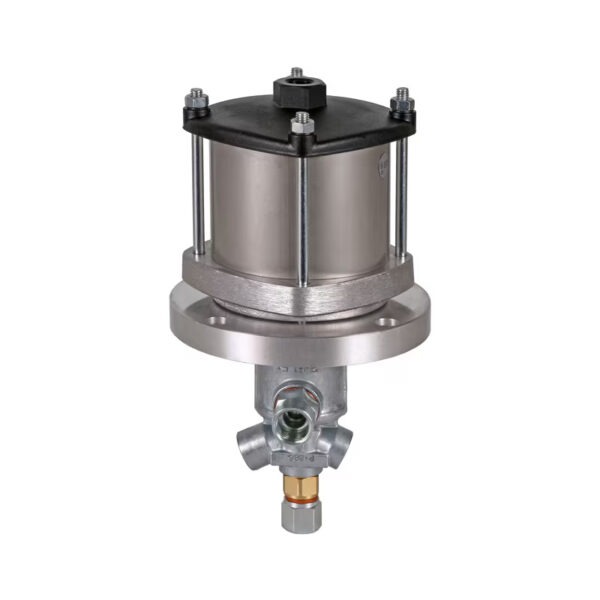
The modular pneumatic motor is completely controlled by pneumatics. Compressed air supplied to the pneumatic motor causes the piston in the cylinder to reciprocate (up and down). At the same time, air is simultaneously released from the opposite chamber of the cylinder through the outlet port. The signal valve acts as a sensor and transmits pneumatic signal pressure to the control valve once the piston reaches its full stroke in one direction. The control valve then pneumatically reverses the piston's movement, resulting in reciprocating operation.
The pumps consist of two components: a pneumatic motor and a pump tube with a built-in vane piston. The moving piston activates the vane piston via suction and pumping. The pumps are supplied as modules for subsequent assembly by the user, but can also be supplied assembled upon request.